You turn off a faucet or a washing machine finishes its cycle, and suddenly your walls echo with a loud bang or a sharp thud that makes you stop and listen. Those noises can feel random, but they usually point to a pressure problem inside your plumbing system that does not go away on its own. Water hammer is one of those issues that starts as a sound and can turn into stress on pipes, fittings, and appliances if it keeps happening. At A/C & Plumbing Doctors, in Gilbert, AZ, we help homeowners figure out what their plumbing is trying to tell them before small disturbances turn into plumbing repairs that interrupt daily life.
What Water Hammer Sounds Like and Why It Startles You
Water hammer usually shows up right after you shut off water fast. You might hear a single bang when you close a bathroom faucet, or a series of thuds when the washing machine stops filling. The sound can come from inside a wall, under a floor, or near the ceiling, which makes it feel like the whole house is involved. It is not your imagination. Pipes can transmit vibration like a drum, so the noise travels and echoes.
In many homes, the loudest hammer happens at fixtures that use quick-closing valves. Newer washing machines, dishwashers, refrigerator ice makers, and some single-handle faucets can stop water flow in a snap. That sudden stop forces moving water to slam into a closed valve, and the shock wave pushes back through the piping. If your pipes do not have enough cushioning, the pressure wave turns into movement. You hear it as a bang, and you may even feel it as a shudder in the floor or a cabinet. A one-time thump can happen, but repeated hammering is a sign your system needs attention.
Common Triggers That Cause Water Hammer in Real Homes
Some triggers are obvious because the noise lines up with one action. You shut the kitchen faucet off, and you hear a bang. Other triggers take longer to connect because they happen automatically. Ice makers cycle at random times. Dishwashers fill and stop in stages. Sprinkler valves open and close on a timer. Those devices can create a hammer effect when you are not even in the room.
High water pressure can make the hammer effect more noticeable. When pressure runs high, water moves with more force, and the pressure spike after a fast close hits harder. Pressure changes can also happen when a utility provider switches pumping settings or when a neighborhood demand shifts during peak hours. Another trigger is air in the lines.
After a plumbing repair, water shutoff, or seasonal drain down, trapped air pockets can change how the system absorbs shock. You may hear sputtering at a faucet and then a loud knock later. Loose pipes are another common contributor. When pipes are not anchored well, even a normal pressure wave can turn into a loud impact as the pipe taps the framing. These triggers often stack together, which is why one home gets a mild click while another gets a bang that sounds like a door slam.
Why Water Hammer Can Lead to Leaks and Appliance Trouble
Water hammer is not only a noise issue. It is a stress issue. The pressure spike can put extra strain on fittings, joints, and supply lines that were designed for smooth flow. Flexible connectors behind a washer or under a sink can take repeated jolts. Shutoff valves can loosen over time, especially if the valve body already has wear. In some cases, a small drip begins after weeks of banging because a connection starts to shift or a washer deforms.
Appliances can feel the impact, too. Washing machine inlet valves open and close frequently, and water hammer can shorten their lifespan. Dishwasher fill valves can also wear faster if the system keeps slamming pressure into them. If you notice hammering and also notice small performance changes, like longer fill times or inconsistent water flow, those can be connected. Water hammer can even make a pressure relief valve on a water heater discharge in small bursts if the system experiences repeated spikes. You might find moisture near a drain line and assume the water heater failed, when the real issue is unstable pressure. Catching water hammer early can help you avoid secondary problems that cost more than the original fix.
How Plumbers Identify the Source Without Guessing
A thorough diagnosis starts with pattern spotting. A technician will ask when the noise happens, which fixtures are involved, and whether it started after a new appliance install or plumbing work. They may check water pressure at a hose bib or another test point to see whether pressure is within a normal range. They may also inspect for a pressure regulator and check whether it is functioning as intended.
The next step often involves looking at the likely trigger points. Washing machines and dishwashers are frequent culprits because their valves close quickly. A technician may inspect supply lines, valve connections, and how the pipes are supported behind the wall or under the floor in that area. They may also look for signs of pipe movement, like scuffed framing or loose clamps.
If the home has older air chambers, they may evaluate whether those chambers still hold air or if they have become waterlogged. A focused evaluation reduces the chance of random part swapping. It also helps the technician recommend solutions that match your home’s layout instead of relying on a one-size answer.
Solutions That Stop the Bang Instead of Covering It Up
One common solution is installing water hammer arrestors near the fixtures that trigger the problem. These devices provide a cushion that absorbs the shock wave when a valve closes. They are often used for washing machines, dishwashers, and ice makers because those valves close fast and create strong pressure changes. Placement matters. A well-placed arrestor near the valve can reduce hammering far more than one placed across the house.
Another solution is addressing high pressure with a pressure regulator adjustment or replacement if the home uses one. When pressure runs too high, the whole system reacts more violently to quick valve closures. Reducing pressure can reduce hammer and also reduce wear across fixtures. Securing loose pipes is also part of many repairs.
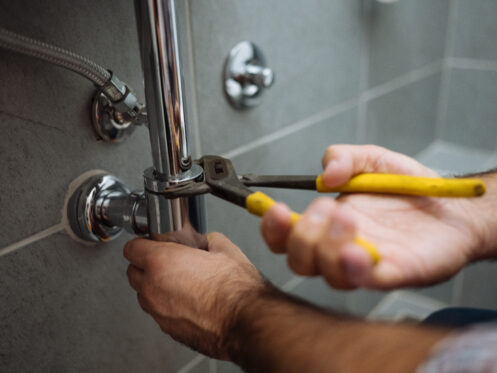
Adding supports, replacing worn straps, and isolating pipes from framing contact can reduce movement and stop impact noises. In some cases, a plumber may recommend updating appliance supply lines to better handle pressure changes. The goal is to give the system a way to absorb shock and stay stable when water flow changes fast.
Bring Your Plumbing System Back to a Steady Rhythm
If water hammer keeps showing up, it often points to pressure or flow issues that need more than a surface fix. Along with addressing noise concerns, A/C & Plumbing Doctors also helps with pressure regulator checks, pipe inspections, fixture upgrades, and system tuning that support smoother water flow throughout your home. If you are ready to bring balance back to your plumbing and stop the noise at its source, schedule a service visit with A/C & Plumbing Doctors today.